
How to Create a Montessori-Inspired Learning Environment for Young Children
The early years of a child’s life are a period of incredible growth and development, laying the foundation for future learning and success. While traditional educational approaches often emphasize direct instruction, the Montessori method offers a strikingly different philosophy – one rooted in self-directed activity, hands-on learning, and respect for the child’s natural psychological development. Increasingly, parents are seeking ways to incorporate these principles into their homes, creating learning environments that nurture curiosity, independence, and a lifelong love of learning. This article will delve into the core tenets of the Montessori approach and provide a comprehensive guide to creating a Montessori-inspired learning space for your young child, even without formal Montessori training or materials.
The beauty of a Montessori-inspired environment isn’t about replicating a classroom perfectly; it’s about understanding why certain elements are present and adapting them to your home and child’s needs. It's about moving away from an environment that overstimulates and directs, towards one that gently supports and invites exploration. Think of it as designing a space where your child can follow their inner guidance, develop concentration, and build a strong sense of self-confidence. This approach isn't a quick fix, but rather a philosophy that fosters genuine, intrinsic motivation in children.
This article will move beyond the aesthetic appeal often associated with Montessori and focus on the underlying principles. We will explore key elements such as prepared environments, practical life activities, sensorial exploration, and the role of the adult, offering practical actionable steps you can implement today to support your child's development. The goal is to empower you to become a skilled observer and facilitator of your child’s unique learning journey.
- Understanding the Core Principles of the Montessori Method
- Creating a Prepared Environment: Space & Materials
- The Power of Practical Life Activities
- Stimulating the Senses: Sensorial Materials & Exploration
- The Role of the Adult: Observer & Facilitator
- Extending the Montessori Philosophy: Beyond the Home
Understanding the Core Principles of the Montessori Method
At its heart, the Montessori method is a child-centered educational approach developed by Dr. Maria Montessori in the early 20th century. Her observations led her to believe that children possess an innate drive to learn and a remarkable capacity for self-direction when provided with the right environment. This “absorbent mind,” as she called it, is particularly active in the first six years of life, during which children effortlessly acquire knowledge from their surroundings. The environment isn’t simply a backdrop but an integral part of the learning process, designed to support concentrated activity and foster independence.
One crucial aspect of this philosophy is the concept of “sensitive periods.” These are specific times in a child’s development when they exhibit an intense interest and aptitude for learning a particular skill or concept – whether it’s language, order, movement, or sensorial exploration. Recognizing these periods allows parents to provide the appropriate materials and support, maximizing the child’s learning potential. For example, a child going through a sensitive period for language will be intensely interested in books, sounds, and vocabulary, whereas one in a sensitive period for order will demonstrate an unusually strong need for routines and predictability.
Instead of pushing a curriculum, Montessori emphasizes offering a carefully curated selection of materials that invite exploration and challenge the child at their individual level. This isn’t about free-for-all chaos; it’s about a “prepared environment” that is ordered, aesthetically pleasing, and designed to meet the developmental needs of the child. This intentional design encourages concentration, independence, and a love of learning – a powerful combination for a successful and fulfilling life.
Creating a Prepared Environment: Space & Materials
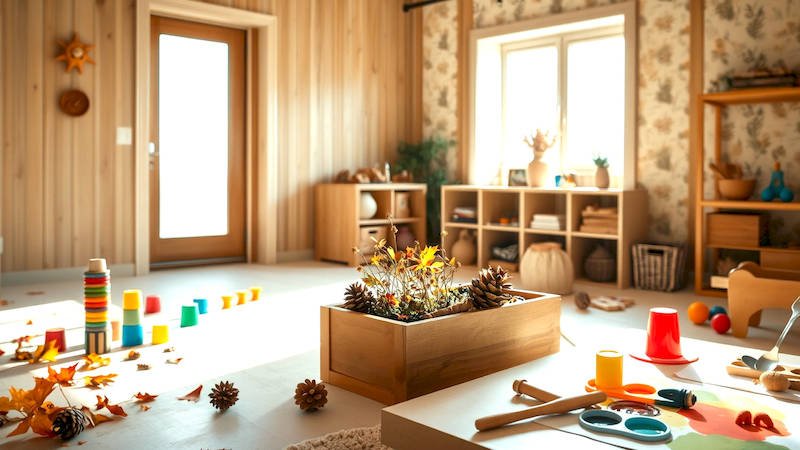
The prepared environment is the cornerstone of the Montessori approach. It’s more than just a tidy room; it’s a carefully organized space designed to promote independence, order, and concentration. Consider the scale of the environment – everything should be accessible to the child. This means low shelves displaying appealing, carefully selected materials, child-sized furniture, and a clear pathway for movement. The arrangement encourages the child to make independent choices and take responsibility for their learning. Avoid overstimulation by limiting the number of toys available at any one time; rotate materials regularly to maintain interest and focus.
Materials themselves are a crucial element. They should be made of natural materials whenever possible – wood, cotton, glass – and be aesthetically pleasing. The materials are designed to isolate specific concepts, allowing the child to master one skill before moving on to the next. Think about activities categorized by skill: practical life (pouring, sweeping, buttoning), sensorial (exploring colors, shapes, textures), language (sandpaper letters, moveable alphabet), and math (number rods, golden beads). A classic example is the Pink Tower, a sequence of ten pink cubes of increasing size, which helps children develop visual discrimination and understand concepts like size and volume. Remember, the goal isn't expensive materials; creativity and resourcefulness can go a long way.
Observe your child closely to understand their interests and needs. Adapt the environment based on these observations. If they are fascinated by puzzles, offer a variety of puzzles with increasing levels of difficulty. If they enjoy practical life activities, ensure they have child-sized tools and opportunities to participate in household tasks. The prepared environment is dynamic, evolving along with your child’s growth and development.
The Power of Practical Life Activities
Practical life activities are often overlooked but are foundational to the Montessori approach. These are everyday tasks – pouring water, washing dishes, buttoning clothes, sweeping the floor – that help children develop coordination, concentration, independence, and a sense of responsibility. They aren’t just about learning practical skills; they are about building self-esteem, fostering a sense of belonging, and developing a feeling of competence. Children genuinely want to contribute and participate in the world around them.
Consider setting up a low shelf with practical life materials: a small watering can and spray bottle for plant care, a child-sized broom and dustpan, a bowl of soapy water and a sponge for washing, a basket of folded napkins and cutlery for setting the table. Break down complex tasks into smaller, manageable steps and demonstrate them slowly and deliberately. Initially, you may need to guide your child, but gradually allow them to assume more independence. Expect spills and messes – they are part of the learning process! Embrace the opportunity for repetition and refinement.
The benefits extend far beyond simply learning how to perform a task. Practical life activities help children develop executive function skills – planning, organization, and self-regulation – which are essential for success in all areas of life. According to Angela Duckworth, author of Grit, these skills are vital for long-term achievement. By providing opportunities for practical life activities, you are not merely teaching your child to be self-sufficient; you are laying the groundwork for a lifetime of resilience and success.
Stimulating the Senses: Sensorial Materials & Exploration
Montessori education places a strong emphasis on sensorial learning – engaging the child’s senses to understand the world around them. The goal is not simply to label objects but to develop the child’s ability to perceive and discriminate differences in size, shape, color, texture, sound, and smell. This develops their critical thinking and analytical skills on a foundational level.
Sensorial materials are carefully designed to isolate specific sensory qualities. The Color Tablets, for instance, help children match and grade colors, developing their visual discrimination skills. The Sound Cylinders allow children to distinguish between different sounds, fostering auditory perception. The Rough and Smooth boards provide tactile experiences, enabling children to differentiate between various textures. These materials aren’t just toys; they are tools for refining the senses and laying the foundation for more abstract learning.
Extend sensorial exploration beyond specific materials. Take your child on nature walks and encourage them to describe what they see, hear, smell, and touch. Cook together and let them experiment with different flavors and textures. Engage in art activities that stimulate creativity and sensory awareness. Remember the goal is to offer opportunities for children to actively observe, explore, and make connections between their senses and the world around them.
The Role of the Adult: Observer & Facilitator
Perhaps the most fundamental distinction between traditional education and the Montessori approach lies in the role of the adult. In a Montessori-inspired environment, the adult is not a teacher in the traditional sense; they are an observer, a facilitator, and a guide. Your role is to prepare the environment, present new materials when the child is ready, and then step back and allow them to explore and learn independently.
Observe your child closely to identify their interests, needs, and challenges. Intervene only when necessary – to offer assistance, redirect attention, or provide gentle guidance. Avoid interrupting their concentrated work. Resist the urge to “show them how” – instead, encourage them to problem-solve and discover solutions on their own. "The goal of early childhood education should be to activate the child's own natural self-development," says Dr. Montessori.
Cultivate a mindset of patience and respect. Accept that learning is a process, and that mistakes are an essential part of that process. Provide positive reinforcement and encouragement, focusing on effort and progress rather than outcome. By trusting in your child’s innate ability to learn and providing a supportive environment, you empower them to become lifelong learners.
Extending the Montessori Philosophy: Beyond the Home
While creating a Montessori-inspired environment at home is a powerful start, consider extending the philosophy into other areas of your child's life. When selecting childcare or preschools, look for those that embrace similar principles – child-led learning, hands-on activities, and a focus on independence. Even interacting with extended family can be approached with a Montessori mindset, encouraging exploration, problem-solving, and respectful communication.
Furthermore, consciously limit screen time and prioritize outdoor play. Nature provides a wealth of sensorial experiences and opportunities for exploration and discovery. Encourage imagination and creativity through open-ended play, providing materials like building blocks, art supplies, and dress-up clothes. By consistently applying these principles across all aspects of your child's life, you reinforce their natural inclination to learn and grow.
In conclusion, creating a Montessori-inspired learning environment is not about strict adherence to a set of rules, but about understanding and applying the underlying principles of child-centered learning. It’s about fostering independence, cultivating curiosity, and respecting the child’s innate desire to learn. By preparing the environment, offering engaging materials, emphasizing practical life skills and sensorial exploration, and adopting the role of observer and facilitator, you can empower your child to become a confident, capable, and lifelong learner. The key takeaways are to observe your child, embrace their natural curiosity, and trust in their ability to learn and grow at their own pace. Remember, this is an ongoing journey—embrace the process and enjoy watching your little pioneer blossom.
Deja una respuesta