Using Music and Movement to Improve Memory and Focus in Preschoolers
The preschool years are a period of explosive brain development, laying the foundation for future learning and success. Within this crucial window, nurturing cognitive skills like memory and focus is paramount. While traditional academic exercises have their place, increasingly, educators and parents are recognizing the profound impact of music and movement on these very abilities. It's more than just fun and games; integrating rhythmic activities into a preschooler's day can literally rewire their brains for enhanced learning. This isn’t about creating miniature musicians; it’s about harnessing the natural link between physical activity, auditory stimulation, and cognitive function.
For many, the connection seems intuitive – a lively song aids recall, a simple dance helps break up monotony and refocus energy. But the science backing these observations is surprisingly robust. Research demonstrates that music and movement stimulate multiple areas of the brain simultaneously, forging new neural pathways and strengthening existing ones. This holistic approach to learning contrasts with more isolated cognitive exercises, proving significantly beneficial for young children. As Dr. Nina Kraus, a neuroscientist at Northwestern University, asserts, “Musical training isn’t just about music; it’s about enhancing the nervous system.” This article will explore how to effectively leverage music and movement to bolster memory and focus in preschoolers, providing practical strategies for both home and classroom environments.
- The Neurological Basis: Why Music and Movement Work
- Boosting Memory Through Musical Mnemonics & Repetition
- Movement Breaks and the Regulation of Focus
- Rhythmic Activities & Executive Function Skills
- Creating a Music & Movement Rich Environment
- Adapting for Different Learning Styles and Needs
- Conclusion: A Symphony of Learning
The Neurological Basis: Why Music and Movement Work
The brain is incredibly responsive to rhythm and melody. When a child engages with music, their auditory cortex lights up, processing the sounds. Simultaneously, movement activates the motor cortex, cerebellum, and basal ganglia – areas critical for coordination, balance, and procedural memory. Crucially, these areas aren’t working in isolation. Music and movement powerfully activate the corpus callosum, the bridge connecting the left and right hemispheres of the brain, fostering communication and integration between analytical and creative thinking. This cross-hemispheric activity is key to strengthening overall cognitive function.
Furthermore, music triggers the release of dopamine, a neurotransmitter associated with pleasure, motivation, and reward. This creates a positive learning environment, making the experience inherently more engaging and memorable. Consider the simple act of learning the alphabet song. The tune provides a scaffolding for recall which is much stronger than rote memorization. This is the power of associating abstract information with something emotionally resonant and stimulating. Research indicates that children who participate in regular musical activities show improved verbal memory, spatial-temporal reasoning, and executive functions – all critical components of academic success.
This neurological response isn't limited to formal music lessons. Even simple rhythmic games and movement activities, like clapping along to a beat or mimicking animal movements described in a song, can have a measurable impact. The key is consistent engagement and active participation, not necessarily technical precision. The brain benefits from any activity that integrates auditory, kinesthetic, and emotional experiences.
Boosting Memory Through Musical Mnemonics & Repetition
Mnemonics, memory aids that help organize and recall information, are remarkably effective for young children. Music provides a particularly powerful framework for creating these aids. Think beyond the alphabet song; nearly any concept can be transformed into a catchy tune or rhyme. Simple counting songs, songs about shapes and colors, or songs detailing the life cycle of a butterfly – these all capitalize on the brain’s natural aptitude for pattern recognition and musical memory. The more repetitive and engaging the song, the stronger the memory trace will become.
However, it's not just about creating songs. Incorporating movement into these musical mnemonics intensifies the learning process. For example, while singing a song about body parts, children can touch the corresponding body parts as they sing. While learning about numbers, they can jump, clap, or stomp a number of times correlating to the song. This kinesthetic component anchors the information in their bodies, making it far more likely to be retained. Furthermore, creating your own mnemonics with the children fosters a sense of ownership and makes the learning experience more personalized. Encourage them to suggest rhymes and movements to accompany the songs – this collaborative approach amplifies the cognitive benefits.
Case studies have shown significant improvement in recall when music and movement are combined with mnemonic strategies. A study conducted at the University of California, Irvine, revealed that children who learned vocabulary words set to a melody and accompanied by gestures demonstrated a 20% higher recall rate than those who used traditional memorization techniques.
Movement Breaks and the Regulation of Focus
Preschoolers aren’t designed for prolonged periods of sedentary activity. Their natural inclination is to move, explore, and play. Expecting them to sit still and concentrate for extended durations is often counterproductive. Instead, strategically incorporating “movement breaks” throughout the day can actually improve their ability to focus. These breaks don't need to be elaborate; simple activities like jumping jacks, stretching, or a quick dance party can be incredibly effective.
The science behind this is rooted in the brain's need for stimulation. When children are physically active, their brains release endorphins and increase blood flow, promoting alertness and cognitive function. Movement breaks also help regulate the nervous system, reducing stress and anxiety, which can be major inhibitors of focus. Integrating movement breaks with thematic learning is particularly effective. For instance, if learning about animals, children can mimic the movements of different creatures. If studying shapes, they can use their bodies to create those shapes.
Studies have also shown movement breaks can alleviate symptoms of ADHD in young children. According to the Child Mind Institute, “Physical activity isn’t a cure for ADHD, but it can be a very helpful part of a treatment plan." By allowing children to release pent-up energy and regulate their nervous systems, movement breaks create a more conducive learning environment.
Rhythmic Activities & Executive Function Skills
Executive function skills – including working memory, inhibitory control, and cognitive flexibility – are crucial for academic success and life skills. Fortunately, music and movement are exceptional tools for developing these skills. Activities that require children to respond to changes in tempo, rhythm, or direction demand focused attention and inhibitory control (the ability to resist impulsive reactions). Think of the game “Red Light, Green Light”, facilitated by fast and slow music – children have to actively listen and respond to auditory cues, inhibiting the urge to move when the music stops.
Similarly, dance and creative movement activities encourage cognitive flexibility, the ability to switch between different thought patterns or tasks. Improvisational dance, where children are asked to move in response to different musical styles or prompts, challenges them to think on their feet and adapt their movements accordingly. Musical games that require following multi-step instructions—like "Simon Says" using musical actions—strengthen working memory.
Creating musical compositions (even simple ones using percussion instruments) fosters planning, organization, and problem-solving skills. The child has to think ahead, consider the sequence of sounds, and execute their plan. These subtle yet powerful activities contribute significantly to the development of critical cognitive abilities.
Creating a Music & Movement Rich Environment
Integrating music and movement doesn’t require a dedicated music curriculum or expensive equipment. It’s about weaving these elements into daily routines. Simple strategies include playing background music during transition times, incorporating songs into circle time, utilizing rhythm instruments during story time, and dedicating short periods throughout the day for free dance and movement exploration.
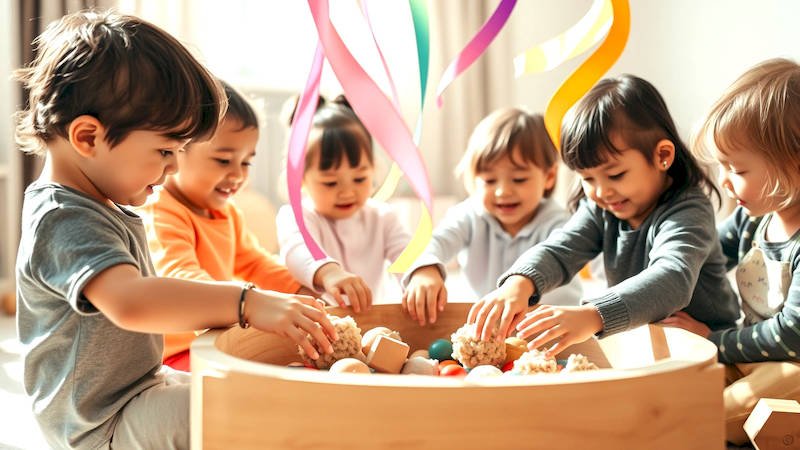
Accessibility is key. Ensure a variety of musical genres are available, exposing children to diverse rhythms, melodies, and cultural styles. Similarly, provide opportunities for both structured and unstructured movement. Structured activities might include directed dance lessons or rhythmic games, while unstructured activities might involve free play with scarves, ribbons, or movement props. Create designated spaces for movement, even if it's just a cleared area in the classroom or living room.
Importantly, remember to be a model. Engage with the music and movement yourself! Your enthusiasm and participation will encourage children to embrace these activities. Don't be afraid to be silly and have fun – the goal is to create a supportive and engaging environment where children can explore, learn, and grow.
Adapting for Different Learning Styles and Needs
While the benefits of music and movement are widely applicable, it's crucial to acknowledge that children learn in different ways. Some preschoolers are naturally drawn to physical activity, while others are more reserved. Some thrive in structured environments, while others prefer open-ended exploration. Adapt your approach to meet individual needs.
For children who are hesitant about movement, start small. Offer them opportunities to participate in passive ways, like clapping along to the beat or playing simple percussion instruments. For children who crave more challenge, provide opportunities for more complex movements and rhythmic patterns. For children with sensory sensitivities, be mindful of the volume of the music and the types of movements offered. Provide quiet corners where they can retreat if needed.
If a child has a physical limitation, find adaptive ways to participate. For example, a child with limited mobility can still engage with music through singing, drumming, or conducting. It's all about finding ways to include every child and celebrate their unique abilities.
Conclusion: A Symphony of Learning
Integrating music and movement into the preschool experience is not simply an enhancement; it is a fundamental component of holistic early childhood education. By tapping into the brain’s natural responses to rhythm and melody, we can unlock children’s potential for improved memory, enhanced focus, and strengthened executive function skills. From utilizing musical mnemonics to incorporating strategic movement breaks, the possibilities are vast and readily accessible.
The key takeaways are to prioritize active participation, adapt to individual needs, and embrace the joy of learning through sensory exploration. By recognizing music and movement as powerful tools for cognitive development, we can create learning environments that nurture the whole child and prepare them for a lifetime of success. Start small – add a song to your daily routine, incorporate a quick dance break, and observe the positive impact it has on your preschooler’s learning and well-being. You'll be orchestrating a symphony of learning that resonates far beyond the classroom.
Deja una respuesta