How to Identify Your Child’s Unique Learning Style at Home
The classroom isn’t the only place learning happens. In fact, much of a child’s fundamental learning – about themselves, their environment, and how they best process information – occurs outside of formal schooling. As parents, understanding how your child learns is arguably as crucial as what they learn. Recognizing your child’s learning style isn't about labeling them; it's about unlocking their potential by fostering an environment and employing strategies that resonate with their natural inclinations. By tailoring your approach to their individual needs, you can empower them to become more confident, engaged, and successful learners, not just in school, but throughout life.
For many parents, the idea of ‘learning styles’ can feel abstract or even controversial. Some educators debate the rigid application of specific styles, preferring broader concepts like multiple intelligences. However, recognizing preferences for auditory, visual, kinesthetic, or reading/writing methods offers valuable insight into how a child best absorbs and retains information. It moves beyond a one-size-fits-all approach, allowing you to supplement formal education and build a supportive learning ecosystem at home. Ignoring these stylistic preferences can lead to frustration, decreased motivation, and untapped potential.
This article will provide a comprehensive guide to identifying your child’s unique learning style within the comfort of your home, offering practical observations, activities, and approaches to nurture their individual brilliance. We’ll explore common learning styles, offer concrete ways to identify them, and, most importantly, provide actionable strategies to support your child’s learning journey.
- Understanding the Core Learning Styles: A Foundation of Observation
- Observing Your Child's Play and Daily Routines: Decoding the Clues
- Simple Home Activities to Reveal Learning Preferences: Hands-On Exploration
- Adapting the Home Environment to Support Each Style: Creating a Learning Sanctuary
- Combating Challenges and Addressing Mixed Learning Styles: Flexibility is Key
- Beyond Identification: Fostering a Love of Learning
Understanding the Core Learning Styles: A Foundation of Observation
Identifying a learning style begins with understanding the fundamental categories. While individuals often exhibit a blend of styles, one or two usually dominate. The four commonly recognized learning styles are Visual, Auditory, Kinesthetic, and Reading/Writing. Visual learners thrive with images, charts, and diagrams. They often visualize concepts and have a strong sense of spatial relationships. Auditory learners excel through listening, discussions, and verbal explanations; they remember things said and benefit from reading aloud. Kinesthetic learners, often called "tactile" learners, learn best through physical activity, hands-on experiences, and movement. Finally, Reading/Writing learners prefer to learn through written words – they take copious notes, enjoy reading textbooks, and express themselves effectively in writing.
It's important to move beyond simple labels. Think of these styles as tendencies, not limitations. A child may be primarily a visual learner but benefit from incorporating auditory elements into their study process. The goal isn't to box your child in but to understand their preferred pathways to knowledge. For example, a child might struggle with passively listening to a lecture (auditory) but grasp the same concept immediately when presented as a mind map or flowchart (visual). This demonstrates the importance of observational skills. Are they doodling during a story? Likely a visual learner. Are they repeating information back to you, almost like a song? A strong indicator of an auditory preference.
Keep in mind that these styles aren't mutually exclusive, and many children demonstrate a blend. The VARK questionnaire (Visual, Aural, Read/Write, Kinesthetic) is a commonly used tool, though typically geared towards older students. For younger children, observing their natural behaviors and preferences during play and everyday activities is far more effective than relying on formal assessments. Look for patterns: which activities consistently capture their attention and lead to deeper engagement?
Observing Your Child's Play and Daily Routines: Decoding the Clues
One of the most valuable tools for identifying your child’s learning style is simply watching them. Pay close attention to how they approach different tasks and activities. During playtime, a visual learner might gravitate towards building with LEGOs, drawing, painting, or puzzles. They are often detail-oriented and enjoy creating. An auditory learner, on the other hand, might engage in role-playing, telling elaborate stories, or enjoying music and rhymes. They often ask clarifying questions and benefit from verbal explanations.
Consider their reaction to instructions. Does your child need to see a demonstration to understand a new game or concept (visual)? Or do they prefer you to simply tell them the rules (auditory)? Do they need to try it themselves, to physically experience it, before it clicks (kinesthetic)? When completing chores, observe their approach. Does your child meticulously follow written instructions (reading/writing)? Or do they prefer a verbal walkthrough (auditory) or a hands-on demonstration (kinesthetic)?
For instance, exhibiting a pattern of constantly needing to touch things, fidgeting, or struggling to sit still for extended periods strongly suggests a kinesthetic leaning. Conversely, a child who excels at memorizing songs or reciting stories demonstrates a strong auditory preference. Another powerful clue lies in how they react to storytelling. A visual learner might ask about the characters’ appearances and the setting, while an auditory learner might focus on the plot and dialogue.
Simple Home Activities to Reveal Learning Preferences: Hands-On Exploration
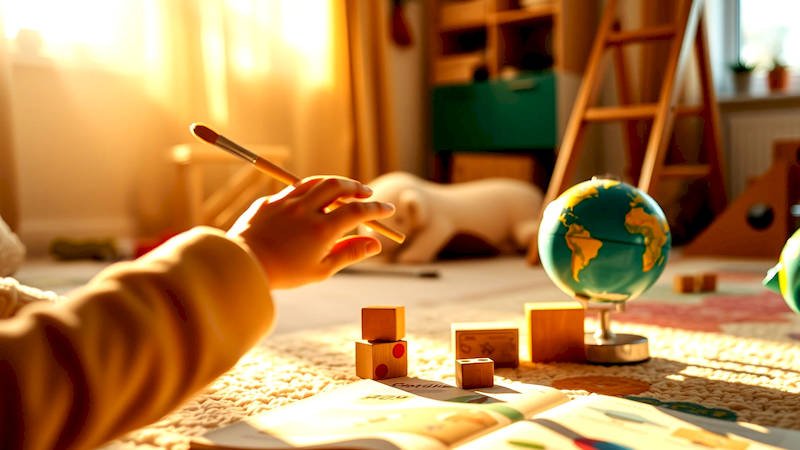
Beyond observation, introducing specific home activities can reveal valuable insights into your child’s learning style. Instead of direct questioning ("Do you learn best by seeing things?"), create scenarios where they can naturally demonstrate their preferences. For example, give your child instructions for building something with blocks. Offer the instructions in three ways: verbally, in written form with pictures, and with a pre-built example. Observe which method they gravitate towards and which leads to the most successful outcome.
Similarly, when teaching a new concept – like the life cycle of a butterfly – present the information in multiple formats: read a book about it, watch a video, create a visual timeline, and even act out the life cycle through movement and play. Note which approach sparks the most interest and leads to the best retention of information. As a case study, consider a 7-year-old struggling with math facts. Trying flashcards (visual) yielded limited results. However, using manipulatives like counting bears and acting out addition/subtraction problems (kinesthetic) led to a breakthrough.
Experiment with different mediums and see how your child responds. Encourage them to explain concepts back to you in their preferred way – drawing a picture, singing a song, or building a model. Remember, the goal isn’t to force a specific style but to create opportunities for them to shine.
Adapting the Home Environment to Support Each Style: Creating a Learning Sanctuary
Once you have a better understanding of your child’s learning style, you can adapt your home environment to support their needs. For visual learners, create a visually stimulating space with colorful artwork, charts, and maps. Encourage drawing, painting, and other visual activities. For auditory learners, provide a quiet space for reading aloud, listening to audiobooks, and engaging in discussions. Minimize distractions and encourage them to verbalize their thoughts.
Kinesthetic learners thrive in environments that allow for movement and exploration. Create a designated play area where they can build, create, and move freely. Incorporate physical activities into learning – use manipulatives, go on nature walks, and encourage them to act out concepts. Finally, for reading/writing learners, provide a comfortable and well-lit space for reading and writing. Stock up on books, journals, and writing materials. Encourage them to take notes and write stories.
Consider the specific layout of their study area. A visual learner might benefit from a large whiteboard or bulletin board, while a kinesthetic learner might need a flexible space that allows for movement. Even something as simple as the type of lighting can make a difference – visual learners often prefer bright, natural light, while auditory learners might benefit from a softer, more ambient glow.
Combating Challenges and Addressing Mixed Learning Styles: Flexibility is Key
It's crucial to be flexible and remember that most children don’t perfectly fit into a single learning style category. You may find your child exhibits strengths in multiple areas or that their preferences shift depending on the subject matter. Furthermore, external factors like stress or fatigue can influence their learning behavior. If your child is struggling with a particular concept, don’t immediately assume that your initial assessment of their learning style was incorrect.
Instead, try incorporating elements from different styles. For example, a child who’s primarily a visual learner might still benefit from listening to an audiobook version of a text. The key is to offer a multi-sensory approach that caters to a variety of learning preferences. According to research by Rita Dunn, a pioneer in learning styles, “Students learn more and retain information better when they're taught in their modality.” This suggests that acknowledging and addressing individual learning styles leads to improved academic outcomes.
Furthermore, be patient and supportive. Learning is a process, and it’s important to create a safe and encouraging environment where your child feels comfortable experimenting and taking risks.
Beyond Identification: Fostering a Love of Learning
Identifying your child’s learning style is just the first step. The ultimate goal is to foster a lifelong love of learning. Don’t focus solely on academic performance; emphasize curiosity, exploration, and the joy of discovery. Encourage your child to pursue their interests, even if they don’t align with traditional academic subjects.
This might involve taking them to museums, visiting historical sites, or enrolling them in extracurricular activities that spark their passion. Remember, learning happens everywhere, not just in the classroom. By creating a supportive and stimulating environment, you can empower your child to become a confident, engaged, and lifelong learner. And finally, continue to observe, adapt, and refine your approach as your child grows and evolves.
In conclusion, understanding your child’s learning style is a powerful tool for unlocking their potential. By carefully observing their behaviors, conducting simple home activities, and adapting your environment accordingly, you can create a learning sanctuary that nurtures their individual brilliance. Remember, it's not about labeling your child but about empowering them to learn in a way that resonates with their unique strengths and preferences. The key takeaways are fluid observation, multi-sensory engagement, flexibility, and a persistent fostering of curiosity and a love of learning. Start today by simply watching your child at play, and embark on a journey of discovery together.
Deja una respuesta