Building Empathy in Preschoolers: Practical Activities for Parents
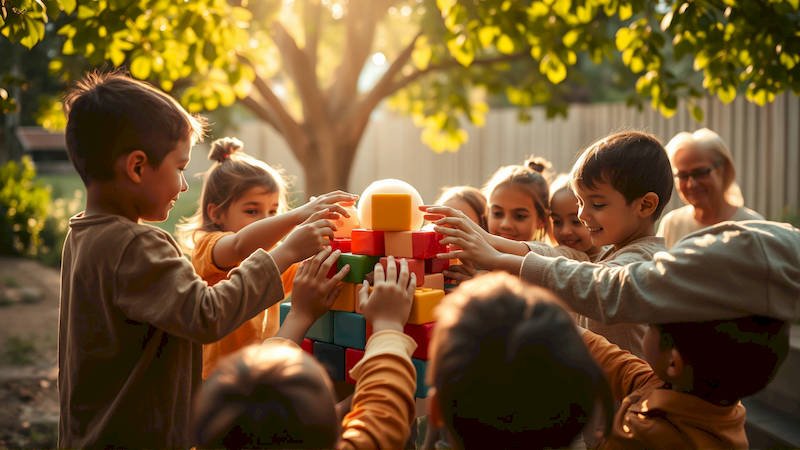
Empathy, the ability to understand and share the feelings of another, isn’t an innate quality; it’s a skill cultivated over time. For preschoolers, this development is crucial. It lays the foundation for healthy social relationships, conflict resolution, and moral reasoning. While seemingly abstract for young children, empathy is surprisingly teachable. This article will delve into the importance of empathy development during the preschool years, explore the neurological underpinnings of empathy, and provide parents with practical, actionable activities to foster this vital skill in their children. Recognizing that children learn best through play and interaction, we'll focus on techniques that weave empathy-building into everyday routines.
The preschool years (ages 3-5) represent a critical period for social-emotional development. During this time, children are learning to navigate increasingly complex interactions with peers, understand social cues, and begin to regulate their own emotions. A lack of empathy can lead to difficulties in these areas, manifesting as aggressive behavior, social isolation, or difficulty forming meaningful connections. Conversely, children with a strong empathetic foundation are more likely to be kind, compassionate, and successful in their relationships. As Dr. Marc Brackett, Director of the Yale Center for Emotional Intelligence, states, “Emotional literacy is just as important as reading and writing literacy.” Teaching empathy isn’t about eliminating negative feelings; it's about recognizing, understanding, and appropriately responding to all feelings – in oneself and in others.
- Understanding the Foundations of Empathy in Young Children
- Modeling Empathetic Behavior: The Power of "Name It to Tame It"
- Reading and Storytelling: Windows into Another’s World
- Role-Playing and Pretend Play: Stepping into Another’s Shoes
- Addressing Conflict with an Empathetic Approach
- Expanding the Circle of Empathy: Animals and the Environment
- Conclusion: Cultivating a Kinder, More Connected Future
Understanding the Foundations of Empathy in Young Children
Empathy in preschoolers isn't the same as adult empathy. It develops in stages, beginning with emotional contagion - where a child instinctively mirrors the emotions of others, often unconsciously. If a friend cries, they cry too. This is a vital first step, demonstrating a basic connection to another’s emotional state. As they mature, they begin to develop cognitive empathy - the ability to understand that someone else is feeling something different from themselves, even if they don’t necessarily feel that emotion themselves. Finally, compassionate empathy emerges, where the child not only understands another's feelings but also feels motivated to help.
This neurological development is heavily reliant on the mirror neuron system, a set of neurons that fire both when an individual performs an action and when they observe the same action performed by another. This system is thought to be crucial for understanding intentions, learning through imitation and, importantly, experiencing empathy. Activities that encourage observation and imitation – like role-playing – actively stimulate this system, strengthening empathetic responses. It’s essential, however, to understand that development varies. Some children may demonstrate empathetic behaviors earlier than others. Patience and consistent modeling remain key.
Modeling Empathetic Behavior: The Power of "Name It to Tame It"
Preschoolers are masterful imitators. They learn by observing the behaviors of adults around them, especially their parents. Therefore, the most powerful tool you have for cultivating empathy is acting empathetically yourself. This means consciously demonstrating compassion and understanding in your interactions with your child and others. Think about your own reactions to emotional situations; are you dismissive, judgmental, or supportive and validating? Your child is constantly absorbing these cues.
A particularly effective technique, popularized by Dr. Brackett, is “Name It to Tame It.” This involves verbally identifying and labeling emotions – both your own and your child’s. For example, instead of simply saying “Don’t cry,” try saying, “I see you’re feeling really sad because your tower fell down. It’s okay to feel sad when something you worked hard on gets broken.” This validates the child's feelings and helps them learn to recognize and understand their own emotional experience. Extending this to others, you might say, “Look, Sarah is looking upset. Maybe she’s feeling frustrated because she can’t reach the blocks. Let’s ask her if she needs help.” This models empathetic observation and encourages a helpful response.
Reading and Storytelling: Windows into Another’s World
Books and stories provide a safe and accessible way for preschoolers to explore a wide range of emotions and perspectives. Choosing books that feature characters facing diverse challenges and experiencing a variety of feelings is paramount. Don’t just read to your child; read with them. Pause throughout the story and ask open-ended questions like: “How do you think the character is feeling right now?” or “What do you think made the character act that way?”
Encourage your child to connect the characters’ emotions to their own experiences. For instance, if a character is feeling scared, you might ask, “Remember when you were scared of the dark? How did that feel?” This helps them build the bridge between understanding the emotion in the story and recognizing it in themselves and others. Beyond reading pre-written stories, encourage your child to create their own narratives, focusing on the feelings of the characters. You can start with simple prompts like: “Tell me a story about a time someone was feeling lonely.” This fosters imaginative thinking and strengthens their ability to understand different viewpoints.
Role-Playing and Pretend Play: Stepping into Another’s Shoes
Pretend play is a cornerstone of preschool development, and it offers a fantastic opportunity to practice empathy. Encourage scenarios where your child can take on different roles and perspectives. For example, play “doctor” and have your child be the doctor taking care of a “sick” stuffed animal. This requires them to consider the animal's discomfort and act with care. Or, play “family” and encourage your child to take on the role of a sibling or parent, requiring them to anticipate the needs and feelings of others.
Don’t be afraid to introduce challenging scenarios. For example, “Let’s pretend your friend accidentally broke your toy. What would you do? How would you feel?” This provides a safe space for your child to explore difficult emotions and practice compassionate responses. Resist the urge to direct the play; allow your child to take the lead and make their own decisions. Your role is to observe and offer gentle guidance or prompting if needed. A key is to ask “What if…” questions to push your child’s perspective-taking skills.
Addressing Conflict with an Empathetic Approach
Conflicts are inevitable, even among the most well-intentioned preschoolers. However, these conflicts can be valuable learning opportunities for empathy. Instead of immediately stepping in to resolve the conflict for your child, facilitate a conversation that encourages them to consider the other child’s perspective. A simple framework can be: "Tell me what happened," then "How do you think [other child] is feeling right now?" and finally, "What could you do to make things better?".
Avoid labeling or blaming. Instead of saying, "You were wrong to take her toy," try saying, "I understand you wanted that toy, but when you take it from someone else, it can make them feel sad." Focusing on the impact of their actions, rather than assigning blame, encourages your child to reflect on their behavior and consider the feelings of others. This approach also models healthy conflict resolution skills that they can carry with them throughout their lives. It’s crucial to remember that empathy isn't about condoning harmful behavior, but about understanding the underlying emotions that contribute to it.
Expanding the Circle of Empathy: Animals and the Environment
Empathy doesn’t have to be limited to interactions with other people. Expanding your child’s circle of empathy to include animals and the environment can foster a sense of interconnectedness and responsibility. Caring for a pet – even a simple goldfish – can teach children about the needs of another living creature and the importance of providing care and compassion.
Discussing the feelings of animals in books or documentaries can also be beneficial. "How do you think the lion feels when its home is destroyed?" Encouraging a connection with nature – a walk in the park, planting a garden – can similarly inspire a sense of empathy for the environment. Talk about the importance of protecting animals and their habitats. This broadens their understanding of empathy beyond immediate social circles and instills a sense of global citizenship.
Conclusion: Cultivating a Kinder, More Connected Future
Building empathy in preschoolers is not a quick fix but a continuous process of modeling, teaching, and providing opportunities for practice. By consistently demonstrating empathy yourself, utilizing the power of storytelling and role-playing, and addressing conflicts with a focus on understanding, you can lay a strong foundation for your child’s social-emotional development. Remember that empathy is a skill that grows over time, and patience and encouragement are key.
The investment in empathy development during these formative years yields significant returns: children who are better equipped to form healthy relationships, resolve conflicts peacefully, and contribute to a more compassionate and just world. The goal isn't simply to raise “nice” children, but to raise children who genuinely understand and care about the feelings of others, creating a ripple effect of kindness and connection that extends far beyond their immediate surroundings. Take small steps, incorporate these practices into your daily routine, and celebrate your child’s empathetic moments – you are nurturing a vital skill that will benefit them, and the world, for years to come.
Deja una respuesta