Helping Kids Resolve Conflicts Peacefully with Peers
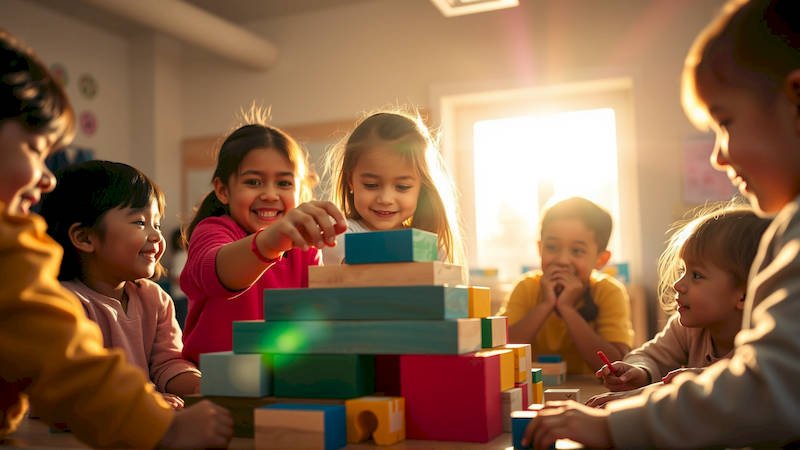
Navigating the social landscape of childhood and adolescence is fraught with challenges, and conflict with peers is an unavoidable part of this journey. While arguments and disagreements can be upsetting for both children and parents, they also represent vital opportunities for growth. Learning to resolve conflicts peacefully isn’t about avoiding disagreement altogether; it’s about equipping children with the skills to communicate effectively, understand different perspectives, and find mutually acceptable solutions. These skills extend far beyond the playground, impacting their future relationships, academic success, and overall well-being. Ignoring or dismissing conflicts can hinder the development of these crucial competencies, while proactively teaching peaceful resolution strategies can empower children to become confident and resilient individuals.
Parental involvement doesn't mean intervening in every squabble. Instead, it means guiding children through the process, offering tools and perspectives that enable them to navigate disagreements independently. This is where many parents feel lost – knowing that peaceful resolution is important, but unsure how to cultivate it. A 2018 study by the American Psychological Association found that children who are consistently taught conflict resolution skills demonstrate higher levels of emotional intelligence and exhibit fewer behavioral problems in school. Much of the time, children lack the language and emotional regulation skills to effectively express themselves and understand others, which is where structured guidance comes in.
- Understanding the Roots of Childhood Conflict
- Teaching Active Listening and Empathetic Communication
- The "I-Statement" Framework for Expressing Needs
- Facilitating Brainstorming and Collaborative Problem-Solving
- Knowing When to Intervene – and When to Step Back
- Conclusion: Cultivating a Culture of Peace
Understanding the Roots of Childhood Conflict
Conflicts between children aren’t always about the stated issue. Often, underlying factors like unmet needs, feelings of insecurity, or a desire for attention play a significant role. A disagreement over a toy might actually be stemming from a child feeling overlooked or wanting to feel a sense of control. Similarly, arguing about who gets to be first in line could be a manifestation of anxiety about fairness or a need to assert independence. Recognizing these underlying emotional drivers is the first step toward helping children navigate conflict constructively. Parents should focus on identifying the root cause of the problem rather than simply addressing the surface-level disagreement.
Furthermore, it's important to acknowledge the developmental stage of the child. A preschooler’s conflict resolution skills will naturally be less sophisticated than those of a middle schooler. Younger children often struggle with perspective-taking, finding it difficult to understand that others may have different thoughts and feelings. Expecting them to resolve conflicts in the same way as an older child is unrealistic. Instead, tailor your approach to their developmental level, offering simple scripts and providing more direct guidance.
Often, children model the conflict resolution styles they observe around them. If parents consistently handle disagreements with aggression or avoidance, children are likely to adopt similar patterns. Creating a home environment where respectful communication and problem-solving are valued and practiced is crucial for fostering these skills in children. This includes demonstrating calm communication during parental disagreements – not shielding children from all conflict, but demonstrating healthy ways to navigate it.
Teaching Active Listening and Empathetic Communication
Active listening is a cornerstone of peaceful conflict resolution. It’s about more than just hearing the words being said; it involves truly understanding the other person’s perspective, both verbally and nonverbally. Encourage your child to make eye contact, nod to acknowledge understanding, and summarize what their peer has said to ensure they've grasped the message. ("So, you're saying you were really excited to use the red crayon, and you felt frustrated when he took it.") This demonstrates respect and validates the other child's feelings, even if your child doesn't agree.
Empathetic communication builds on active listening by encouraging children to consider the other person’s emotions. Asking questions like, “How do you think he felt when that happened?” or “What might be making her so upset?” prompts them to step into their peer’s shoes. Explain that everyone experiences emotions, and recognizing those emotions in others is a sign of maturity and kindness. This isn’t about condoning harmful behavior, but about understanding the emotional context that may be contributing to it.
Practice these skills at home through role-playing scenarios. Present common conflict situations (“Your brother took your LEGOs without asking”) and have your child practice active listening and empathetic responses. Provide constructive feedback, praising their efforts to understand the other person’s perspective and offering suggestions for improvement. The more they practice, the more naturally these skills will come to them in real-life situations.
The "I-Statement" Framework for Expressing Needs
One of the most effective tools for teaching children to express their needs and feelings without escalating conflict is the "I-Statement" framework. This involves framing their complaints in terms of their own experiences rather than blaming the other person. Instead of saying, "You always take my things!", a child can learn to say, “I feel frustrated when my things are taken without asking because I want to feel respected."
The structure of an I-Statement typically includes three parts: 1) "I feel…" (expressing the emotion), 2) "when…" (describing the specific behavior), and 3) "because…" (explaining the impact of the behavior). This framework encourages children to take ownership of their emotions and communicate their needs in a non-accusatory way. It shifts the focus from blaming to expressing one's own experience.
This takes practice, of course. Initially, your child may require prompting and assistance in crafting their I-Statements. Model the use of I-Statements yourself in your interactions with others. For example, "I feel overwhelmed when the house is messy because I need a calm environment to focus." For older children, you can explore different variations of I-Statements, helping them refine their communication skills and adapt the framework to complex situations.
Facilitating Brainstorming and Collaborative Problem-Solving
Once both children have had a chance to express their perspectives, the next step is to facilitate brainstorming and collaborative problem-solving. This involves generating a range of possible solutions without judgment, and then working together to identify a solution that addresses everyone’s needs. Encourage children to think creatively and consider solutions that might not be immediately obvious. “What are some things you both could do to solve this problem?”
Emphasize that the goal isn’t always to find a “winner” and a “loser.” Peaceful conflict resolution often involves compromise and finding a solution that isn't perfect for either party, but is acceptable to both. For example, if two children are arguing over a single toy, potential solutions might include taking turns, finding another toy to play with together, or agreeing to play separate games. Guiding the brainstorming process and helping them assess feasibility is within the parent’s role.
It’s crucial to avoid imposing solutions on the children. Instead, act as a facilitator, guiding them through the process of generating and evaluating options. Ask questions like, “How would that solution make you both feel?” or “What are the potential challenges of that solution?” Empower them to take ownership of the resolution and build their confidence in their ability to solve problems independently.
Knowing When to Intervene – and When to Step Back
While encouraging independence is vital, there are situations where parental intervention is necessary. If a conflict escalates to physical aggression, threats, or bullying, it's crucial to intervene immediately to ensure the safety of all involved. Separate the children, calm them down, and address the inappropriate behavior. However, even in these situations, avoid taking sides or assigning blame. Focus on reinforcing appropriate behavior and reiterate the importance of peaceful resolution.
Conversely, resist the urge to intervene in minor disagreements. Allow children the space to practice their newly acquired skills and work through conflicts on their own. Over-intervention can stifle their development of self-regulation and problem-solving abilities. Observe from a distance, offering support when needed, but allowing them to navigate the situation independently as much as possible.
Expert Erica Komisar, a clinical psychologist specializing in child development, emphasizes the importance of allowing children to experience frustration, stating, "We've become a generation of parents who are afraid to let their children be uncomfortable. But discomfort is essential for growth. It’s through navigating these challenges that children build resilience and learn to cope with life's inevitable difficulties." Remembering this perspective is helpful when considering when – and when not – to step in.
Conclusion: Cultivating a Culture of Peace
Teaching children to resolve conflicts peacefully is a long-term investment in their social-emotional development. It requires patience, consistency, and a commitment to modeling healthy communication and problem-solving skills. By understanding the roots of conflict, teaching active listening and empathetic communication, providing the “I-Statement” framework, and facilitating collaborative problem-solving, parents can empower children to navigate disagreements constructively.
The key takeaway is to view conflict not as a problem to be avoided, but as an opportunity for growth. By equipping children with the tools to resolve conflicts peacefully, we are preparing them to build strong, healthy relationships and become resilient, compassionate individuals. Continue practicing these skills at home, celebrating small victories, and providing ongoing support as your children navigate the complex social world around them. The ultimate goal is not to eliminate conflict altogether, but to cultivate a culture of peace—within your family and beyond.
Deja una respuesta