
How to Teach Children Active Listening Skills for Better Classroom Engagement
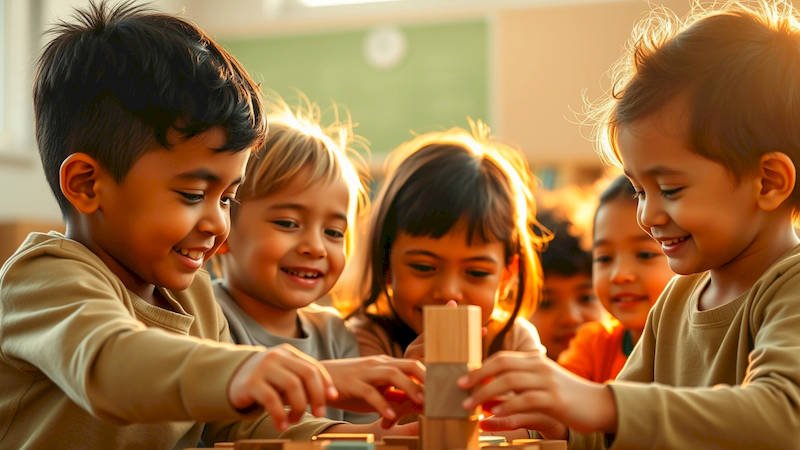
In today’s fast-paced world, the art of truly listening is becoming increasingly rare. We often hear, but do we genuinely listen? This is particularly critical for children, as their ability to listen attentively directly impacts their academic success, social-emotional development, and overall well-being. In the classroom, active listening isn't just about following instructions; it's the foundation of meaningful engagement, comprehension, and respectful interaction. Children who struggle with listening often fall behind academically, experience social difficulties, and may become frustrated and disengaged.
This article delves into the crucial skill of active listening and provides parents and caregivers with practical strategies to cultivate it in their children, specifically preparing them for a more successful and fulfilling classroom experience. We'll move beyond simply telling children to listen and explore how to build the cognitive and emotional muscles required for genuine auditory processing and understanding. It's not a matter of innate talent, but a learned skill – one we can nurture with patience and intention.
The benefits extend beyond the classroom, building stronger family relationships and equipping children with a life skill essential for success in all areas of life. Studies show a strong correlation between active listening skills and emotional intelligence, impacting a child's ability to navigate social situations, resolve conflicts, and build empathy. By investing in this skill now, we are giving children a powerful tool for a bright future.
- Understanding the Core Components of Active Listening
- Modeling Active Listening: The Power of “Me Too”
- Games and Activities to Enhance Listening Skills
- Practical Strategies for Classroom Application: Supporting Your Child
- Addressing Common Challenges and Distractions
- Reinforcing Positive Behaviors and Providing Constructive Feedback
- Conclusion: Building a Foundation for Success
Understanding the Core Components of Active Listening
Active listening goes far beyond simply hearing the words being spoken. It’s a complex process involving several key components: paying attention (both verbally and non-verbally), showing that you’re listening, providing feedback, deferring judgment, and responding appropriately. For children, these components aren't instinctive; they require explicit instruction and consistent modeling from adults. Often, children want to please and respond, but lack the foundational skills to process information accurately.
Often, a child’s inability to actively listen stems not from defiance, but from cognitive overload. A noisy classroom, rapid-fire instructions, or even underlying processing difficulties can make it challenging for children to filter out distractions and focus on the speaker. Recognizing these potential obstacles is crucial for approaching the situation with empathy and tailoring strategies accordingly. Think of it like trying to catch water with a sieve—you need to address the holes before you can expect to hold anything.
Furthermore, it's important to differentiate between hearing and listening. Hearing is a physiological process; listening is a cognitive one. A child might hear a teacher say, “Please open your books to page 25,” but listening requires them to process the instruction, understand its meaning, and then take action. This process involves working memory, attention span, and the ability to filter out irrelevant stimuli – skills that can be developed through targeted practice.
Modeling Active Listening: The Power of “Me Too”
Children learn best by example. Before attempting to teach active listening skills, parents and educators must consistently model them. This means putting away distractions (phones, computers, etc.), making eye contact, nodding to show understanding, and asking clarifying questions. When your child is speaking, truly focus on what they are saying, rather than formulating your response. Resist the urge to interrupt or finish their sentences.
This concept is beautifully illustrated by the “Me Too” approach. When your child expresses a frustration or experience, rather than immediately offering advice or solutions, try responding with “Me too, that sounds really difficult” or “Me too, I can see why you feel that way.” This validates their feelings and demonstrates that you are genuinely listening and empathizing. It builds trust and encourages them to continue sharing their thoughts and experiences, fostering a safe space for communication.
This modeling extends to interactions with others. Narrate your own mindful listening: “I’m going to put my phone away so I can really hear what Grandma is telling me.” Talk about the importance of listening to understand, not just to reply. Slowly, through consistent exposure, children begin to internalize these behaviors and incorporate them into their own interactions.
Games and Activities to Enhance Listening Skills
Making learning fun is key to engaging children and fostering skill development. Numerous games and activities can be incorporated into daily routines to strengthen active listening prowess. "Simon Says" is a classic for a reason—it requires children to listen carefully to instructions and only act when prompted. Variations with complex instructions or a faster pace can increase the challenge.
Another effective activity is "Story Retelling." Read a short story aloud, then ask your child to retell it in their own words, focusing on key details and the sequence of events. This requires them to actively listen and retain information. You can also play “I Spy” using descriptive clues that necessitate careful listening to decipher the hidden object. Consider "Telephone" as a fun way to illustrate how information can change during a conversation if it’s not attentively listened to.
Furthermore, incorporate mindfulness exercises that focus on auditory awareness. Have your child close their eyes and identify different sounds in their environment – a ticking clock, a bird chirping, the rumble of a car. This practice helps them to focus their attention and become more attuned to auditory stimuli.
Practical Strategies for Classroom Application: Supporting Your Child
Parents can proactively partner with teachers to support their child’s active listening skills in the classroom. Communicate with the teacher about any concerns you have and inquire about strategies being used in the classroom. You can also work with the teacher to develop a visual cue or signal that your child can use when they need assistance with focusing or understanding instructions.
For children struggling with long or complex instructions, advocate for breaking them down into smaller, more manageable steps. Explain to your child the importance of asking clarifying questions if they don't understand something. Role-play different scenarios, such as asking the teacher to repeat an instruction or to explain it in a different way. This empowers them to take ownership of their learning and advocate for their needs.
Consider creating a "listening checklist" that your child can keep in their desk. This checklist could include reminders such as: “Eyes on the speaker,” “Hands quiet,” “Think before you speak,” and “Ask questions if you don’t understand.” This provides a visual reminder of the key elements of active listening.
Addressing Common Challenges and Distractions
Children face numerous distractions in the classroom and at home, making it difficult to maintain focus. Identifying the specific challenges your child faces is crucial for tailoring effective strategies. Is it excessive noise? Difficulty sitting still? A tendency to daydream? Once you understand the root cause, you can address it proactively.
For children prone to distraction, providing a quiet workspace with minimal stimuli can be incredibly beneficial. Consider using noise-canceling headphones or playing calming background music. Encourage movement breaks throughout the day to help regulate energy levels and improve focus. Visual aids, such as graphic organizers or checklists, can also help to structure information and reduce cognitive overload.
It's also important to recognize that some children may have underlying learning or attention challenges that require professional evaluation and support. If you suspect your child may have ADHD or another condition, consult with a pediatrician or educational psychologist.
Reinforcing Positive Behaviors and Providing Constructive Feedback
Positive reinforcement is a powerful tool for encouraging desired behaviors. When you see your child actively listening, acknowledge and praise their efforts. Be specific in your praise: "I noticed you were making eye contact and nodding while your teacher was speaking – that shows you were really listening!" Avoid generic praise like “Good job,” as it lacks detail and doesn’t reinforce the specific skill you’re trying to cultivate.
When addressing instances of inattentive behavior, focus on constructive feedback rather than criticism. Instead of saying, “You never listen!” try saying, “I noticed you were looking out the window when I was giving you instructions. Can you try to focus on me next time?” Frame your feedback in a supportive and encouraging manner, emphasizing the positive changes you want to see. It is also useful to offer opportunities for re-engagement, that is, re-stating the instruction in a different way and asking the child what they understood.
Conclusion: Building a Foundation for Success
Teaching active listening skills is an investment in your child’s future. It’s not about silencing them, but about empowering them to become better communicators, learners, and empathetic individuals. By modeling these skills, incorporating fun activities, collaborating with teachers, and providing consistent support, you can help your child unlock their full potential.
Remember, the goal isn't perfection, but progress. There will be times when your child struggles, and that's okay. The key is to remain patient, consistent, and supportive. Active listening is a skill that takes time and practice to develop. Ultimately, the ability to truly listen—to understand, empathize, and respond thoughtfully—is a gift that will serve your child well throughout their life, both inside and outside the classroom. Prioritizing this skill will not only improve their academic performance but also nurture their social-emotional growth and equip them for a more fulfilling and successful future.
Deja una respuesta