
Using Puppetry to Develop Communication and Imagination
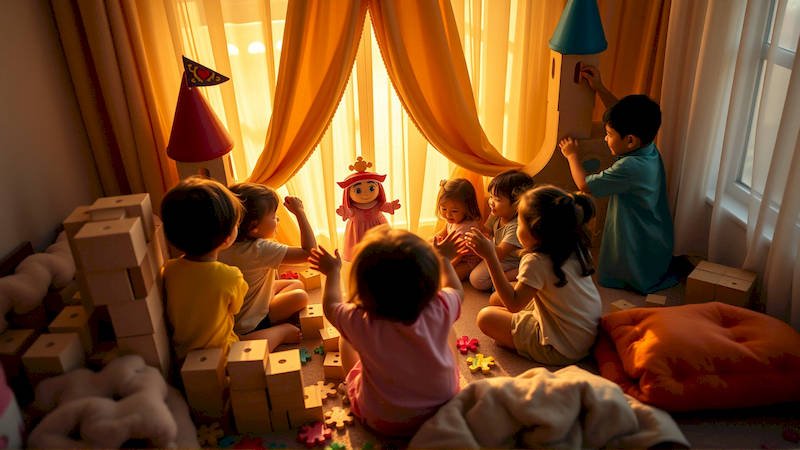
Puppetry – an art form stretching back millennia, from ancient shadow plays to modern-day Sesame Street – holds a surprisingly potent key to unlocking a child’s communication and imaginative potential. In a world increasingly dominated by screens, the tactile, interactive nature of puppetry offers a refreshing and developmentally beneficial experience. It’s more than just entertainment; it's a powerful tool parents and educators can use to foster language skills, emotional intelligence, social-emotional learning, and creative thinking. This article delves into the multifaceted benefits of puppetry for early childhood development, providing practical guidance on incorporating this ancient art into everyday learning and play.
The importance of early language and social-emotional development is now well-established by developmental psychologists. Children who possess strong communication skills tend to excel academically and form healthier relationships. Simultaneously, the capacity to understand and manage emotions, and to empathize with others, is crucial for overall well-being. Puppetry taps into both of these areas, providing a safe and engaging environment for children to practice these vital skills. It’s a medium where inhibitions can lower and a child's voice—both literally and figuratively—can truly emerge.
- The Foundational Benefits: Language Development & Verbal Skills
- Fostering Emotional Intelligence Through Puppet Characters
- Sparking Imagination and Creativity: The World of "What If?"
- Puppets as Tools for Social-Emotional Learning (SEL)
- Choosing and Creating Puppets: From Simple Socks to Elaborate Designs
- Integrating Puppetry into Daily Routines and Learning
- Conclusion: A Timeless Tool for Modern Growth
The Foundational Benefits: Language Development & Verbal Skills
Puppetry is a remarkable catalyst for language development in young children. The naturally engaging nature of a puppet encourages interaction and allows children to practice verbalization in a fun, low-pressure environment. Unlike direct questioning which can sometimes feel like an ‘assessment,’ conversation with a puppet feels playful, making children more willing to experiment with language. This is particularly beneficial for children who are shy or struggle with articulation. Speaking for the puppet allows them to explore different voices, tones, and vocabulary without the self-consciousness they might feel when speaking for themselves.
Consider a scenario where a child is hesitant to tell a story. Giving them a puppet and asking, “What does he want to tell us?” can unlock a narrative flow that would otherwise remain hidden. Furthermore, puppetry expands a child's vocabulary. Parents or educators can thoughtfully introduce new words through the puppet's dialogue, subtly integrating them into an engaging storyline. This isn’t just rote memorization; it’s contextual learning, which aids comprehension and retention. The repetitive nature of puppet shows – children often request the same stories and characters – reinforces these new linguistic elements, cementing them in the child's developing vocabulary.
Finally, puppetry actively encourages active listening skills. When interacting with a puppet, children are engaged in a dialogue, demanding they pay attention to the puppet’s responses, process information, and formulate their own replies. This reciprocal exchange is a cornerstone of effective communication and a skill that translates directly to real-world interactions.
Fostering Emotional Intelligence Through Puppet Characters
Beyond language, puppets are powerful instruments for exploring and understanding emotions. Children often project their own feelings onto the puppet characters, giving them a safe space to express themselves and grapple with complex emotions they may not yet have the vocabulary to articulate. A puppet can embody sadness, anger, fear, or joy, providing a visual and relatable representation of these feelings. This allows children to explore these emotions indirectly through the character, building empathy and emotional regulation skills.
A common technique is to create puppets that exhibit different emotional states. For example, a puppet with a drooping face and slow voice can demonstrate sadness, prompting children to ask, “Why is he sad?” This opens a conversation about identifying and validating emotions. Puppets can also act out scenarios that trigger emotional responses, such as sharing toys (cooperation), resolving conflicts (anger management), or facing fears (courage). Playing out these scenarios, even simply, allows children to rehearse appropriate responses and build emotional resilience.
Furthermore, puppetry provides an outlet for children to explore challenging emotions without directly experiencing them. If a child is struggling with separation anxiety, a puppet can portray a similar situation, allowing exploration of the feelings from a safe distance. This indirect approach can be far more effective than direct confrontation, fostering emotional understanding and coping mechanisms.
Sparking Imagination and Creativity: The World of "What If?"
The inherent magic of puppetry is its capacity to ignite imagination. A simple sock puppet can become a brave knight, a wise old wizard, or a mischievous alien – anything a child can dream up. This free-form exploration of "what if?" fuels creative thinking and problem-solving skills. Unlike structured toys with pre-defined functions, puppets are open-ended, demanding a child to actively create the narrative, the character's personality, and the surrounding world.
Encourage spontaneous storytelling. Rather than dictating a script, present a puppet and ask, "What's his story?" or "Where does she live?" Let the child lead the narrative, and build upon their ideas. Provide simple props – a cardboard box for a castle, a blanket for a cave – to enhance the imaginative environment. The focus should be on process, not product; the joy lies in the act of creation, not necessarily in a polished performance.
Moreover, puppet-making itself is a highly creative activity. Crafting a puppet – from simple paper bag puppets to more elaborate felt creations – encourages children to utilize fine motor skills, experiment with different materials, and express their artistic vision. The act of bringing a puppet to life, both through its creation and its performance, is a deeply satisfying experience that fosters a sense of ownership and creative confidence.
Puppets as Tools for Social-Emotional Learning (SEL)
The benefits of puppetry extend firmly into the realm of Social-Emotional Learning. Puppets provide a safe and respectful platform to model positive social behaviors and address sensitive topics. They can be particularly useful in facilitating discussions about conflict resolution, empathy, and inclusivity. Imagine a scenario where two puppet characters are arguing. The puppeteer can guide the conversation towards respectful communication, active listening, and collaborative problem-solving.
Puppetry allows children to explore different perspectives. A puppet can embody a character with a different background, ability, or viewpoint, prompting children to consider things from another's perspective. This fosters empathy and understanding, vital components of social-emotional intelligence. Using puppet shows to act out scenarios that address bullying, exclusion, or prejudice can raise awareness and promote positive social interactions.
Furthermore, puppetry encourages collaboration. Children can work together to create a puppet show, sharing ideas, assigning roles, and building a cohesive narrative. This collaborative process strengthens communication skills, fosters teamwork, and teaches the importance of mutual respect and shared responsibility.
Choosing and Creating Puppets: From Simple Socks to Elaborate Designs
You don’t need expensive, professionally-made puppets to reap the benefits. In fact, some of the most engaging puppets are those created with simple materials. Sock puppets are a classic choice – readily available, inexpensive, and easily personalized with felt, buttons, and yarn. Paper bag puppets are another excellent option, and provide a great canvas for crayons, markers, and paint.
For more ambitious projects, consider felt puppets. Basic sewing skills are required, but the results are durable and visually appealing. Alternatively, you can explore puppet kits that provide all the necessary materials and instructions. However, emphasize the creative process above all else. The key is to involve the child in the puppet-making process, allowing them to contribute to the design and construction. This sense of ownership enhances their engagement and fosters a deeper connection with the puppet.
When selecting or creating puppets, consider diversity and representation. Include puppets of different genders, ethnicities, and abilities to reflect the diversity of the world around us. This promotes inclusivity and helps children develop a broader understanding of different cultures and perspectives.
Integrating Puppetry into Daily Routines and Learning
Integrating puppetry into daily routines can be surprisingly seamless. Use puppets to announce transitions – “Barnaby Bear says it’s time to clean up!” – or to introduce new concepts – “Professor Owl is going to teach us about colors today!” Read stories with puppets representing the characters, or have puppets “interview” family members about their day.
Puppets can also enhance learning activities. Use puppets to practice counting, alphabet recognition, or simple math problems. Incorporate puppets into dramatic play, allowing children to create their own scenarios and narratives. Even mundane tasks, like getting ready for bed, can become more engaging with a puppet companion.
Remember, the goal isn't to turn every activity into a full-blown puppet show. Small, spontaneous moments of puppet play can be just as effective as elaborate productions. The key is to embrace the fun and imaginative possibilities that puppetry offers.
Conclusion: A Timeless Tool for Modern Growth
Puppetry, far from being a relic of the past, remains a powerfully relevant and beneficial activity for early childhood development. Its capacity to foster language skills, emotional intelligence, imagination, and social-emotional learning makes it an invaluable tool for parents and educators alike. By providing a safe, engaging, and playful environment, puppetry empowers children to explore their world, express their feelings, and develop the skills they need to thrive.
The key takeaway is that puppetry isn't about perfection; it’s about process and participation. Encourage experimentation, celebrate creativity, and most importantly, have fun. Start simple – a sock puppet and a spontaneous story are all you need to begin unlocking a child’s potential. Make time each week for dedicated puppet play, incorporate puppets into everyday routines, or even create a designated puppet theater space. By embracing the magic of puppetry, you’re not just providing entertainment; you’re nurturing the building blocks of a bright and fulfilling future for your child.
Deja una respuesta